



How Are UPVC Pipes Applied in Agricultural and Infrastructure Projects?
UPVC pipes have revolutionized modern agricultural and infrastructure development through their exceptional durability, chemical resistance, and cost-effectiveness. These unplasticized polyvinyl chloride systems provide reliable water distribution, drainage, and irrigation solutions that significantly outperform traditional materials in demanding environments. Agricultural operations and large-scale infrastructure projects increasingly rely on UPVC pipes to ensure consistent water supply, efficient waste management, and long-term operational sustainability.
Agricultural Applications of UPVC Piping Systems
Irrigation Network Installation
Modern agricultural operations depend heavily on efficient irrigation systems that deliver precise water quantities to crop zones. UPVC pipes excel in creating comprehensive irrigation networks due to their smooth interior surfaces that minimize friction losses and maximize flow rates. These systems maintain consistent water pressure across extensive field networks, enabling farmers to implement drip irrigation, sprinkler systems, and micro-irrigation technologies with optimal performance.
The installation process for agricultural UPVC pipes involves careful planning of pressure zones, flow requirements, and seasonal water demands. Professional installers create detailed network maps that account for elevation changes, soil conditions, and crop rotation patterns. This systematic approach ensures that irrigation systems deliver water efficiently throughout growing seasons while minimizing energy consumption and operational costs.
Agricultural UPVC pipes demonstrate exceptional resistance to fertilizers, pesticides, and soil chemicals that frequently contact irrigation infrastructure. This chemical stability prevents pipe degradation and maintains water quality throughout the distribution network. Farmers benefit from reduced maintenance requirements and extended system lifespans that justify initial investment costs through improved crop yields and resource efficiency.
Livestock Water Supply Systems
Livestock operations require reliable water delivery systems that provide clean, fresh water to animals throughout production facilities. UPVC pipes create durable water supply networks that resist bacterial growth and maintain water quality from source to consumption points. These systems accommodate varying flow demands across different livestock areas while maintaining consistent pressure and temperature characteristics.
The smooth interior surfaces of UPVC pipes prevent biofilm formation and bacterial accumulation that commonly affect other piping materials. This characteristic proves particularly important in livestock applications where water quality directly impacts animal health and production efficiency. Regular cleaning and sanitization procedures become more effective with UPVC pipes due to their non-porous surfaces and chemical resistance properties.
Installation of livestock water systems using UPVC pipes involves creating distribution networks that reach feeding areas, drinking stations, and cleaning facilities. Professional design considers peak demand periods, seasonal variations, and expansion requirements to ensure adequate capacity throughout operational cycles. These comprehensive systems support optimal livestock health while reducing labor requirements for water management tasks.
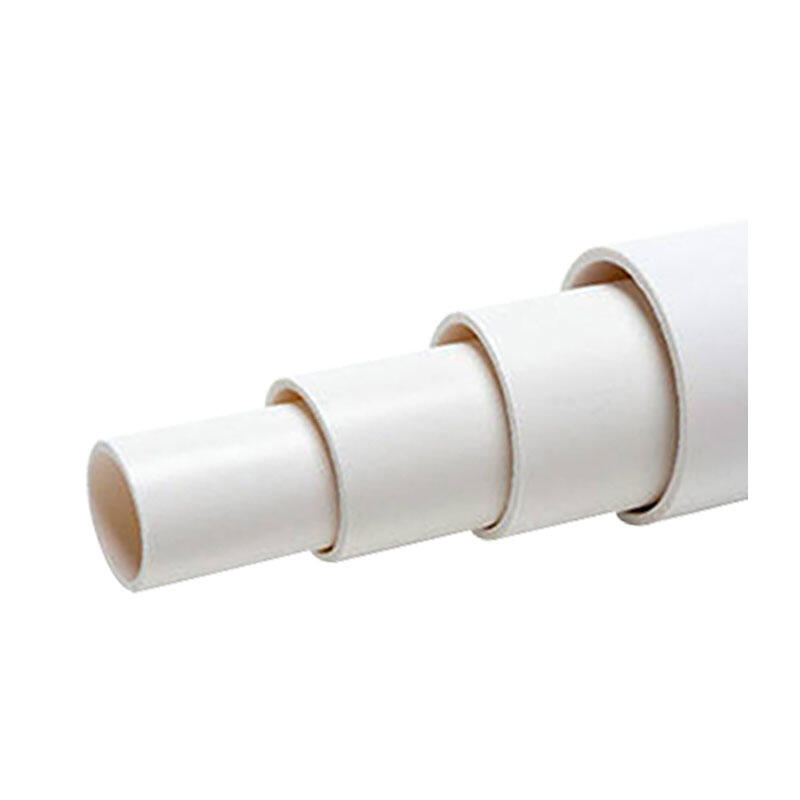
Infrastructure Development Projects
Municipal Water Distribution
Urban and suburban water distribution systems increasingly incorporate UPVC pipes to deliver potable water to residential, commercial, and industrial consumers. These systems must maintain water quality standards while providing reliable service across diverse demand patterns and environmental conditions. UPVC pipes meet these requirements through their inert chemical composition and structural integrity under varying pressure conditions.
Municipal water projects utilizing UPVC pipes benefit from simplified installation procedures and reduced connection complexity compared to traditional materials. The lightweight nature of these pipes reduces equipment requirements and labor costs during installation phases. Additionally, the availability of various joint types and connection methods allows engineers to design flexible systems that accommodate future expansion and maintenance requirements.
Long-term performance data from municipal installations demonstrates that UPVC pipes maintain structural integrity and water quality characteristics for decades under normal operating conditions. This reliability translates to reduced replacement cycles and lower lifecycle costs for municipal water authorities. The corrosion resistance of UPVC pipes prevents metal contamination and maintains consistent water chemistry throughout distribution networks.
Sewage and Drainage Applications
Wastewater management systems in both urban and agricultural settings rely on UPVC pipes to transport sewage, stormwater, and industrial effluents safely and efficiently. These applications demand materials that resist chemical attack from diverse waste streams while maintaining structural integrity under varying flow conditions. UPVC pipes excel in these demanding environments through their comprehensive chemical resistance and smooth flow characteristics.
The design of sewage systems using UPVC pipes incorporates gravity flow principles and pump station requirements to create efficient waste transport networks. Engineers calculate pipe sizes, slopes, and connection details to ensure adequate capacity during peak flow events while minimizing maintenance requirements. The smooth interior surfaces of UPVC pipes reduce friction losses and prevent solid accumulation that commonly causes blockages in other piping systems.
Installation of drainage systems using UPVC pipes requires careful attention to bedding materials, backfill procedures, and joint integrity to ensure long-term performance. Professional contractors follow established guidelines for excavation, pipe placement, and compaction to create stable underground installations. These proper installation techniques maximize system lifespan and prevent costly repairs or replacements in critical infrastructure applications.
Technical Advantages in Project Implementation
Material Properties and Performance
The technical specifications of UPVC pipes contribute significantly to their success in agricultural and infrastructure applications. These materials exhibit excellent tensile strength, impact resistance, and dimensional stability across wide temperature ranges. The unplasticized formulation provides superior mechanical properties compared to flexible PVC while maintaining chemical inertness and UV stability essential for outdoor applications.
Thermal expansion characteristics of UPVC pipes require consideration during system design to accommodate temperature variations without creating stress concentrations. Professional engineers incorporate expansion joints, flexible connections, and proper support spacing to manage thermal movement effectively. These design elements ensure that systems maintain integrity throughout seasonal temperature cycles common in agricultural and infrastructure environments.
The pressure rating capabilities of UPVC pipes enable their use in high-pressure applications while providing safety margins that prevent catastrophic failures. Standard pressure classes accommodate most agricultural and municipal requirements while specialized high-pressure versions serve industrial applications with elevated operating pressures. This versatility makes UPVC pipes suitable for diverse project requirements without compromising performance or safety standards.
Installation Efficiency and Cost Benefits
Project timelines benefit significantly from the installation advantages offered by UPVC pipes compared to traditional materials. The lightweight nature reduces equipment requirements and speeds installation procedures while maintaining joint integrity and system reliability. Contractors appreciate the ease of handling and cutting that enables efficient progress in both urban and rural project environments.
Cost analysis of UPVC pipe installations demonstrates favorable economics through reduced material costs, simplified installation procedures, and extended service life expectations. Initial investment costs typically prove lower than alternatives while operational expenses decrease due to minimal maintenance requirements and excellent durability characteristics. These economic advantages make UPVC pipes attractive for budget-conscious agricultural and infrastructure projects.
The availability of comprehensive fitting systems and connection options facilitates complex network designs without requiring specialized fabrication or custom components. Standard fittings accommodate most installation requirements while maintaining system integrity and performance standards. This standardization reduces project complexity and ensures reliable connections throughout system lifespans.
Environmental Considerations and Sustainability
Ecological Impact Assessment
Environmental assessment of UPVC pipes in agricultural and infrastructure applications reveals positive sustainability characteristics that support responsible development practices. The manufacturing process generates minimal emissions compared to metal alternatives while the finished products exhibit excellent durability that reduces replacement frequency and associated environmental impacts. These characteristics align with modern sustainability goals for infrastructure development.
The chemical inertness of UPVC pipes prevents leaching of harmful substances into soil and groundwater systems, making them environmentally safe for agricultural applications. This stability ensures that irrigation systems using UPVC pipes do not contaminate crops or affect soil chemistry over extended operational periods. Environmental agencies recognize these benefits in their recommendations for sustainable agricultural infrastructure development.
Recycling capabilities of UPVC pipes contribute to circular economy principles by enabling material recovery at end-of-life stages. Established recycling programs process used UPVC pipes into new products, reducing waste generation and resource consumption. This recyclability enhances the overall environmental profile of projects incorporating UPVC pipes in their infrastructure systems.
Water Conservation Benefits
Water conservation becomes increasingly important in agricultural and municipal applications as resource scarcity affects operational sustainability. UPVC pipes contribute to conservation efforts through their low leakage rates and efficient flow characteristics that minimize waste throughout distribution systems. These properties prove particularly valuable in water-stressed regions where resource efficiency directly impacts project viability.
The smooth interior surfaces of UPVC pipes reduce friction losses that commonly waste energy in pumping systems while maintaining flow rates with lower pressure requirements. This efficiency translates to reduced energy consumption and lower operational costs throughout system lifespans. Agricultural operations benefit from these efficiencies through improved irrigation uniformity and reduced water waste.
Long-term water quality maintenance using UPVC pipes prevents contamination that could render water supplies unusable for intended purposes. This reliability ensures that agricultural and municipal systems continue providing safe water throughout their operational lifespans without requiring costly treatment or replacement due to pipe degradation or contamination issues.
Project Planning and Implementation Strategies
Design Considerations and System Optimization
Successful implementation of UPVC pipes in agricultural and infrastructure projects requires comprehensive design processes that account for specific operational requirements, environmental conditions, and performance expectations. Professional engineers conduct detailed analyses of flow requirements, pressure conditions, and installation constraints to optimize system performance and ensure long-term reliability.
System hydraulics calculations for UPVC pipes incorporate friction factors, elevation changes, and demand patterns to size networks appropriately and maintain adequate service levels. These calculations ensure that systems operate efficiently throughout their design life while providing reserve capacity for future expansion or increased demand. Proper sizing prevents both under-performance and over-investment in infrastructure capacity.
Material specifications for UPVC pipes must align with project requirements including pressure ratings, temperature ranges, and chemical exposure conditions. Engineers select appropriate pipe classes and fitting types to ensure compatibility with operational parameters while maintaining cost-effectiveness. This careful specification process prevents performance issues and ensures that installed systems meet project objectives reliably.
Quality Control and Installation Standards
Quality assurance programs for UPVC pipe installations establish procedures that ensure materials meet specifications and installation practices follow industry standards. These programs include material inspection, joint preparation verification, and pressure testing protocols that validate system integrity before commissioning. Comprehensive quality control prevents failures and ensures optimal performance throughout operational periods.
Installation standards for UPVC pipes specify procedures for excavation, bedding preparation, pipe placement, and backfilling that protect installed systems and ensure design performance. Professional contractors follow these standards to create stable installations that resist settlement, shifting, and external loads throughout service life. Proper installation techniques prove essential for realizing the full performance potential of UPVC pipe systems.
Testing and commissioning procedures verify that completed UPVC pipe installations meet design requirements and perform as intended before final acceptance. These procedures include pressure testing, flow verification, and water quality assessment to confirm system functionality. Successful commissioning ensures that projects deliver expected benefits while identifying any issues requiring correction before operational handover.
FAQ
What are the main advantages of using UPVC pipes in agricultural irrigation systems
UPVC pipes offer several key advantages in agricultural irrigation including excellent chemical resistance to fertilizers and pesticides, smooth interior surfaces that minimize friction losses and clogging, lightweight construction that simplifies installation, and long service life that reduces replacement costs. These pipes maintain water quality throughout distribution networks while providing reliable performance across varying weather conditions and seasonal demands.
How do UPVC pipes compare to metal pipes in infrastructure applications
UPVC pipes typically outperform metal alternatives in infrastructure applications through superior corrosion resistance, lower installation costs, reduced weight for easier handling, and excellent chemical inertness that prevents water contamination. While metal pipes may offer higher pressure ratings in some applications, UPVC pipes provide better overall value through reduced maintenance requirements, longer service life, and lower total lifecycle costs in most municipal and agricultural installations.
What installation considerations are critical for UPVC pipe success in infrastructure projects
Critical installation factors for UPVC pipes include proper bedding and backfill materials to prevent stress concentrations, adequate support spacing to handle thermal expansion, appropriate joint preparation and sealing to prevent leakage, and careful handling to avoid damage during installation. Following manufacturer guidelines and industry standards ensures optimal performance and prevents premature failures that could compromise project objectives.
How do environmental conditions affect UPVC pipe performance in agricultural applications
Environmental factors affecting UPVC pipes in agriculture include UV exposure which requires proper burial or protection, temperature variations that cause thermal expansion requiring appropriate joint design, soil chemistry that could affect pipe longevity although UPVC shows excellent chemical resistance, and frost conditions that may require insulation or drainage provisions. Proper system design accounts for these factors to ensure reliable long-term performance in diverse agricultural environments.