



How Is Krah Pipe Used in Stormwater and Wastewater Management Systems?
Modern infrastructure demands drainage solutions that combine durability, structural integrity, and cost-effectiveness to handle the increasing challenges of urban stormwater and wastewater management. Among the innovative technologies addressing these requirements, Krah Pipe has emerged as a preferred solution for engineers and municipal planners worldwide. This advanced piping system utilizes a unique manufacturing process that creates high-density polyethylene pipes with exceptional load-bearing capacity and chemical resistance, making them ideal for both stormwater conveyance and wastewater collection networks. Understanding how Krah Pipe functions within these critical infrastructure systems reveals why it has become a cornerstone technology for sustainable urban drainage design.
The application of Krah Pipe in stormwater and wastewater systems extends far beyond simple fluid conveyance. These structured-wall pipes leverage their unique profile geometry to distribute external loads efficiently while maintaining hydraulic performance under diverse operating conditions. From highway drainage installations to municipal sewage networks, Krah Pipe serves multiple functional roles that directly address the operational challenges faced by modern water management infrastructure. This article explores the specific mechanisms through which Krah Pipe contributes to stormwater and wastewater management, examining its structural applications, hydraulic performance characteristics, installation methodologies, and long-term system integration benefits that make it an engineering solution of choice across various drainage scenarios.
Structural Applications in Underground Drainage Networks
Load Distribution Through Profile Design
The fundamental mechanism through which Krah Pipe operates in drainage systems relies on its distinctive structured-wall design. Unlike solid-wall pipes, Krah Pipe features a profiled exterior with alternating ribs and valleys that create moment of inertia significantly higher than pipes of equivalent material weight. This geometric configuration enables the pipe to withstand substantial earth loads and traffic surcharges while maintaining dimensional stability. In stormwater applications where pipes may be installed at shallow depths beneath roadways or parking areas, this structural efficiency becomes particularly valuable. The profile design distributes concentrated surface loads across the pipe circumference, preventing localized stress concentrations that could lead to deformation or failure in conventional pipe systems.
When deployed in wastewater management systems, the structural capacity of Krah Pipe ensures long-term integrity even when subjected to dynamic loading conditions. Municipal sewage networks often experience variable flow regimes, pressure surges, and periodic maintenance vehicle traffic above buried lines. The pipe's ability to maintain its circular cross-section under these conditions directly impacts hydraulic efficiency and prevents the infiltration or exfiltration issues associated with pipe deformation. Engineering calculations for Krah Pipe installations account for both static earth pressure and dynamic live loads, with the structured-wall design providing safety factors that accommodate unforeseen loading scenarios throughout the service life of the infrastructure.
Trenchless Installation Capabilities
The application of Krah Pipe in stormwater and wastewater projects increasingly involves trenchless installation methodologies that minimize surface disruption. The pipe's flexibility combined with its structural strength allows for horizontal directional drilling, pipe bursting, and sliplining applications that conventional rigid pipes cannot accommodate. In urban stormwater retrofit projects where existing infrastructure must be upgraded without excavating busy streets, Krah Pipe can be pulled through existing conduits or installed through pilot bores with minimal surface access points. This capability dramatically reduces project timelines, traffic disruption, and overall installation costs while achieving the same hydraulic performance as open-cut installations.
Wastewater system rehabilitation projects particularly benefit from the trenchless compatibility of Krah Pipe. Aging concrete or clay sewer lines can be replaced or lined with new Krah Pipe sections without the extensive excavation traditionally required for system upgrades. The pipe's ability to negotiate moderate curves during pulling operations enables alignment with existing underground utilities, building foundations, and protected environmental areas. Installation contractors utilize specialized equipment to fuse Krah Pipe sections into continuous strings before insertion, creating leak-free joints that eliminate the infiltration and exfiltration problems common in older segmented pipe systems. This installation versatility extends the application range of Krah Pipe into constrained urban environments where traditional construction methods prove impractical or economically prohibitive.
Burial Depth Flexibility and Soil Interaction
The structural engineering principles governing Krah Pipe applications enable installation across a wide range of burial depths, from shallow stormwater culverts to deep wastewater interceptors. The pipe-soil interaction model used in design calculations recognizes that properly compacted backfill transfers loads away from the pipe structure through arching action. Krah Pipe's flexibility allows controlled deflection during backfill placement, which activates lateral soil support and creates a composite structure where pipe and surrounding soil work together to resist external loads. This interaction mechanism permits deeper installations than would be possible with rigid pipe materials of similar wall thickness, making Krah Pipe suitable for gravity sewer systems that require significant cover depth to maintain hydraulic gradients.
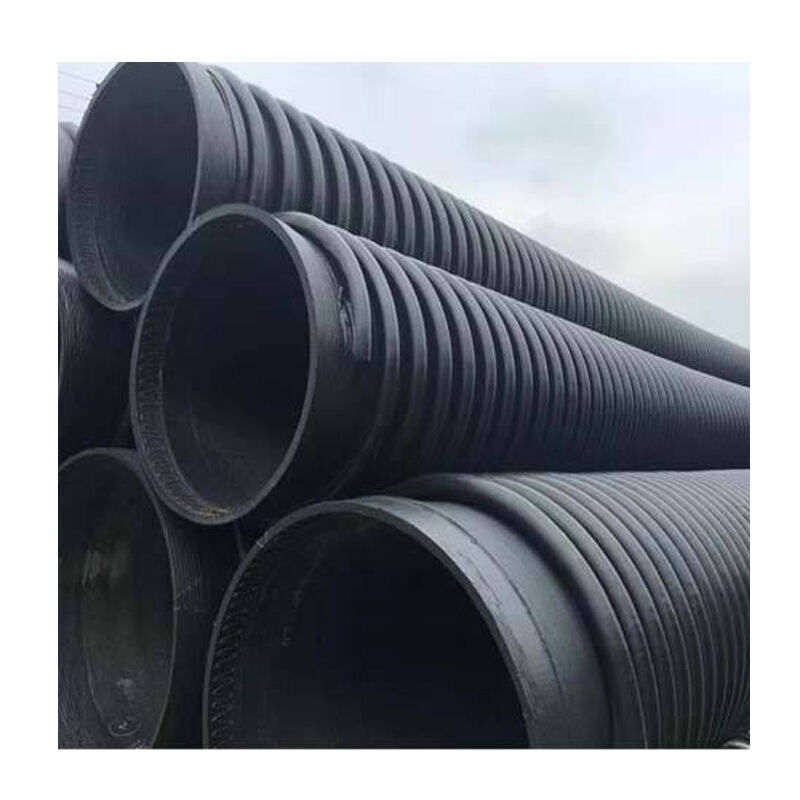
In stormwater management systems, the burial depth flexibility of Krah Pipe facilitates connections between surface collection points and deeper discharge locations or storage facilities. Engineers designing detention basin outlet structures, subsurface infiltration systems, or regional stormwater trunk lines can specify Krah Pipe with confidence that it will perform across varying depth profiles within a single project. The pipe's resistance to crushing under deep burial conditions stems from its profile geometry rather than wall thickness alone, resulting in material efficiency that translates to cost savings on large-scale drainage projects. Installation specifications for Krah Pipe emphasize proper bedding and backfill procedures to ensure the designed pipe-soil interaction occurs, with quality control protocols verifying compaction densities and deflection limits during construction.
Hydraulic Performance in Flow Conveyance
Manning Roughness and Flow Efficiency
The interior surface characteristics of Krah Pipe directly influence its hydraulic performance in both stormwater and wastewater applications. High-density polyethylene material provides a smooth inner wall with Manning roughness coefficient typically ranging from 0.009 to 0.011, significantly lower than concrete or corrugated metal alternatives. This hydraulic smoothness translates to reduced friction losses and higher flow capacities for a given pipe diameter and slope. In stormwater systems designed to convey peak runoff from intense rainfall events, the superior flow efficiency of Krah Pipe allows engineers to specify smaller diameters than would be required with rougher pipe materials, reducing excavation volumes and material costs while maintaining required conveyance capacity.
Wastewater collection systems benefit from the smooth interior of Krah Pipe through reduced solids deposition and lower pumping energy requirements. The consistent surface texture prevents the buildup of grease, biofilm, and sediment that can reduce effective flow area in pipes with rougher interiors. Municipal operators report lower maintenance frequencies and reduced cleaning costs in wastewater networks constructed with Krah Pipe compared to conventional materials. The hydraulic efficiency advantage becomes particularly significant in low-slope sewer lines where maintaining adequate self-cleansing velocities challenges system designers. Krah Pipe's low friction factor helps achieve sufficient flow velocities to transport solids even at minimum design flows, reducing the operational problems associated with sediment accumulation and hydrogen sulfide generation in stagnant wastewater.
Surge Pressure Management
Transient hydraulic conditions in stormwater and wastewater systems generate pressure surges that piping infrastructure must accommodate without failure. Krah Pipe responds to surge events through controlled elastic deformation that absorbs pressure spikes while maintaining system integrity. The material properties of high-density polyethylene provide inherent flexibility that allows the pipe wall to expand slightly under pressure transients, then return to its original dimension as pressure normalizes. This behavior contrasts with brittle materials that may crack under surge conditions or rigid materials that transmit shock waves through the system causing downstream damage. In stormwater networks where inlet grating or channel transitions create turbulent flow conditions, Krah Pipe's surge tolerance prevents the joint separation and wall failure that can occur with less resilient pipe materials.
Force main applications in wastewater collection systems subject Krah Pipe to particularly demanding surge scenarios. Pump startup and shutdown events create rapid pressure changes that propagate through piping networks at the speed of sound in the fluid medium. Engineers designing pressurized wastewater conveyance systems specify Krah Pipe with appropriate pressure ratings to withstand both steady-state operating pressures and anticipated surge magnitudes. The pipe's ability to accommodate surge pressures without requiring extensive air release valves, surge tanks, or other protective devices simplifies system design and reduces capital costs. Long-term performance data from municipal wastewater systems demonstrates that properly specified Krah Pipe maintains its pressure rating throughout decades of service, with the material's resistance to chemical attack and fatigue ensuring continued surge tolerance over the infrastructure lifespan.
Temperature Effects on Hydraulic Capacity
The operating temperature of conveyed fluids influences the hydraulic performance of Krah Pipe through effects on both fluid viscosity and pipe material properties. Stormwater systems experience wide temperature variations as runoff temperatures fluctuate with ambient conditions and seasonal changes. Krah Pipe's polyethylene composition exhibits thermal expansion characteristics that must be considered in system design, particularly for above-ground or shallow-burial applications where temperature swings are most pronounced. The material's coefficient of thermal expansion causes dimensional changes that affect joint details and support spacing, with design guidelines providing expansion loop configurations or flexible joints to accommodate thermal movement without inducing stress concentrations.
Wastewater temperature effects on Krah Pipe performance generally remain less variable than stormwater scenarios due to the relatively constant temperature of domestic sewage. However, industrial wastewater contributions may introduce elevated temperatures that affect both hydraulic flow characteristics and long-term material durability. Krah Pipe specifications include temperature rating limits that define safe continuous operating temperatures and occasional peak exposure temperatures. Engineers designing systems that may convey warm wastewater verify that anticipated temperatures fall within the pipe's rated range, with material selection adjusted if elevated temperatures are expected. The thermal stability of high-density polyethylene used in Krah Pipe manufacture ensures that normal wastewater temperatures do not degrade material properties or reduce the pipe's structural capacity over its design life.
Chemical Resistance and Longevity
Corrosion Prevention in Aggressive Environments
The chemical composition of stormwater and wastewater creates aggressive environments that challenge conventional piping materials. Krah Pipe's high-density polyethylene construction provides inherent resistance to the corrosive compounds commonly encountered in drainage applications. Stormwater runoff often contains dissolved salts, petroleum derivatives, and pH extremes from industrial areas or agricultural runoff. Unlike metallic pipes that corrode or concrete pipes that deteriorate through sulfuric acid attack, Krah Pipe remains chemically inert when exposed to these substances. This resistance extends to the full pH range encountered in municipal drainage systems, from acidic industrial contributions to alkaline cleaning agent discharges, ensuring that the pipe maintains its structural integrity and hydraulic performance regardless of water chemistry variations.
Wastewater environments pose particularly severe challenges through the generation of hydrogen sulfide gas in oxygen-depleted conditions. Microbial oxidation of hydrogen sulfide produces sulfuric acid that attacks the crown of gravity sewers, causing catastrophic failures in concrete and metallic pipe materials. Krah Pipe's immunity to this attack mechanism eliminates the corrosion concerns that drive frequent replacement cycles in conventional wastewater infrastructure. Municipal operators selecting Krah Pipe for sewer rehabilitation projects effectively eliminate future acid attack issues, with the pipe's expected service life extending beyond 100 years in typical wastewater service. The chemical resistance advantage translates directly to lifecycle cost benefits, as maintenance and replacement expenses that dominate total cost of ownership for corrosion-susceptible materials essentially disappear when Krah Pipe is specified for new construction or system upgrades.
Abrasion Resistance for Solids-Laden Flows
Stormwater systems frequently convey flows containing suspended sediment, gravel, and debris that cause abrasive wear on pipe interiors. Krah Pipe's polyethylene material exhibits excellent abrasion resistance compared to concrete or metallic alternatives, maintaining its smooth interior surface even after years of exposure to sediment-laden flows. This durability proves particularly valuable in combined sewer systems or stormwater networks serving construction sites, unpaved areas, or erosion-prone watersheds where sediment loads are high. The pipe's ability to resist abrasive wear maintains its hydraulic efficiency throughout its service life, preventing the capacity reductions that occur as rougher materials develop surface irregularities from abrasion damage.
Industrial wastewater applications occasionally introduce solids that create severe abrasion conditions beyond typical municipal sewage characteristics. Food processing facilities, mining operations, and manufacturing plants may discharge wastewater containing abrasive particles that rapidly wear conventional piping materials. Krah Pipe's material properties provide resistance to this type of damage, with the polyethylene's molecular structure allowing it to flex rather than fracture when impacted by suspended solids. Engineers specifying drainage systems for industrial facilities evaluate the abrasion resistance of Krah Pipe against anticipated solids characteristics and flow velocities to ensure appropriate material selection. In applications where extreme abrasion conditions are expected, specialized grades of high-density polyethylene or increased wall thickness specifications may be specified to extend service life while maintaining the chemical resistance and structural advantages inherent to Krah Pipe technology.
Biological Fouling Resistance
The smooth interior surface of Krah Pipe provides minimal adhesion sites for biological growth that can reduce hydraulic capacity in wastewater systems. Biofilm development represents a persistent challenge in gravity sewers where organic material in wastewater supports microbial colonization of pipe walls. While no pipe material remains completely immune to biofilm formation, Krah Pipe's surface characteristics make it significantly more resistant to heavy biological accumulations than rougher materials. The polyethylene surface does not provide the chemical bonding sites available in concrete or the surface irregularities present in corrugated materials, resulting in thinner biofilm layers that exert less impact on flow capacity and generate reduced hydrogen sulfide production.
Stormwater systems using Krah Pipe for extended detention or filtration applications benefit from reduced biological growth that could clog perforations or restrict flow through treatment media. The material's resistance to algae attachment and root penetration makes it suitable for subsurface infiltration systems where biological activity might otherwise compromise system performance. Municipal maintenance records demonstrate that cleaning intervals for Krah Pipe installations typically exceed those required for conventional materials, with inspection videos showing pipe interiors that remain remarkably clean even after decades of service. This reduced maintenance requirement translates to lower operational costs and extended periods between service disruptions, enhancing the overall value proposition of Krah Pipe in long-term infrastructure planning.
System Integration and Connection Methods
Joint Systems for Leak-Free Performance
The integrity of stormwater and wastewater collection systems depends critically on joint performance, as infiltration and exfiltration at pipe connections can compromise both environmental protection and system hydraulics. Krah Pipe utilizes several joint configurations adapted to specific application requirements, with fusion welding representing the most secure connection method. Heat fusion creates homogeneous joints where pipe sections are literally melted together, eliminating the discrete joint interface that represents a potential failure point in mechanical coupling systems. Fusion-welded Krah Pipe installations achieve completely leak-free performance, making them ideal for pressurized force mains or gravity sewers where groundwater infiltration or wastewater exfiltration must be prevented to meet regulatory standards.
Mechanical coupling systems for Krah Pipe provide installation flexibility in applications where fusion welding proves impractical due to field conditions or connection to dissimilar materials. Elastomeric gasket joints accommodate the thermal expansion and ground movement that occur in buried installations while maintaining watertight seals under test pressures. These mechanical joints enable rapid field assembly of large-diameter Krah Pipe sections, reducing installation time on projects with tight construction schedules. Engineers specifying mechanical joint systems for Krah Pipe installations evaluate anticipated ground movement, settlement potential, and service pressure conditions to select appropriate joint configurations and gasket materials. The availability of both fusion and mechanical joining options allows Krah Pipe to integrate seamlessly into complex drainage networks that include multiple pipe materials, fittings, and appurtenance connections.
Fitting and Appurtenance Integration
Stormwater and wastewater systems require numerous fittings, manholes, and appurtenances to function effectively. Krah Pipe integrates with these components through manufactured fittings that maintain the pipe's structural and hydraulic performance characteristics. Molded elbows, tees, and reducers provide flow transitions without the turbulence and head loss associated with field-fabricated connections. In stormwater networks, the availability of standardized Krah Pipe fittings simplifies system design and ensures that flow patterns through transitions can be accurately predicted through hydraulic modeling. Municipal design standards increasingly recognize Krah Pipe as an approved material with established fitting configurations that meet both structural and hydraulic requirements for underground drainage infrastructure.
Manhole connections represent critical integration points where Krah Pipe must provide watertight seals to prevent infiltration or exfiltration. Specialized manhole adapters utilize compression gaskets or fusion-welded boots that connect Krah Pipe to precast concrete, polymer, or brick manholes. The flexibility of these connection systems accommodates the differential settlement that may occur between rigid manhole structures and flexible pipe sections, maintaining seal integrity even as ground conditions change over time. Engineers designing manhole connection details for Krah Pipe installations reference manufacturer specifications and industry standards to ensure proper installation procedures and materials are specified. The proven performance of these connection systems in thousands of installations worldwide provides confidence that Krah Pipe can integrate effectively into comprehensive drainage networks without creating vulnerability points at structure interfaces.
Transition to Existing Infrastructure
Rehabilitation and expansion projects require Krah Pipe to connect with existing drainage infrastructure constructed from various materials including concrete, clay, ductile iron, and steel. Transition coupling systems designed specifically for Krah Pipe installations accommodate these material interfaces while maintaining system integrity. Mechanical couplings with material-specific gasket configurations provide watertight connections between Krah Pipe and conventional materials, with designs that account for differences in pipe stiffness, thermal expansion, and surface texture. In stormwater system expansions, these transition couplings enable new Krah Pipe sections to extend existing concrete or corrugated metal pipe networks without requiring complete system replacement.
Wastewater system rehabilitation projects frequently involve replacing deteriorated pipe sections with new Krah Pipe while maintaining connections to serviceable portions of existing infrastructure. Transition details must accommodate potential misalignment, elevation differences, and diameter changes while providing long-term seal performance. Specialized transition fittings manufactured for Krah Pipe applications include features such as adjustable deflection angles, telescoping lengths, and multiple gasket positions that facilitate field installation under variable conditions. Contractors performing rehabilitation work appreciate the flexibility these transition systems provide, as they eliminate the need for extensive excavation to achieve perfect alignment between new and existing pipe sections. The successful integration of Krah Pipe into existing drainage networks through reliable transition methods enables incremental system improvements that extend infrastructure life without the capital cost and disruption associated with complete replacement projects.
Installation Best Practices and Quality Assurance
Bedding and Backfill Requirements
The performance of Krah Pipe in stormwater and wastewater applications depends fundamentally on proper installation procedures that activate the designed pipe-soil interaction. Bedding materials must provide uniform support along the pipe invert, eliminating point loads that could create stress concentrations. Crushed stone or gravel bedding compacted to specified densities creates a stable foundation that distributes pipe loads to the native soil below. Installation specifications for Krah Pipe typically require minimum bedding thickness based on pipe diameter and native soil conditions, with granular materials extending to the pipe springline to ensure lateral support during backfill placement. Engineers designing Krah Pipe installations recognize that bedding quality directly impacts long-term performance, with inadequate bedding potentially compromising the structural capacity that makes the pipe suitable for its intended application.
Backfill placement and compaction procedures for Krah Pipe installations follow specific protocols that prevent damage while developing the lateral soil support essential to the pipe's structural performance. Granular backfill material placed in lifts and compacted to specified densities on both sides of the pipe simultaneously prevents lateral displacement and activates the arching mechanism that transfers loads away from the pipe structure. Quality control during backfill operations includes monitoring pipe deflection through survey measurements, with installation specifications establishing maximum allowable deflection limits typically ranging from five to seven percent of the pipe diameter. Contractors experienced in Krah Pipe installation understand that achieving proper compaction in the haunch zone beside the pipe represents the most critical phase of backfill operations, as inadequate density in this area can lead to excessive deflection and potential long-term performance issues.
Deflection Testing and Performance Verification
Quality assurance protocols for Krah Pipe installations include deflection testing that verifies the pipe has maintained its circular cross-section within design limits following backfill placement. Mandrel testing involves pulling a rigid mandrel through completed pipe sections to confirm that no location has deflected beyond the maximum allowable percentage. This physical testing method provides definitive proof that the pipe maintains its designed hydraulic area and structural geometry. In wastewater applications where long-term hydraulic capacity must be ensured, deflection testing represents an essential verification step that protects both the installing contractor and the system owner from future performance deficiencies. Municipal inspection agencies frequently require mandrel test documentation before accepting new Krah Pipe installations into the public infrastructure inventory.
Pressure testing supplements deflection verification for Krah Pipe installations in pressurized applications such as wastewater force mains or stormwater pumping system discharge lines. Hydrostatic testing involves filling completed pipe sections with water and pressurizing to specified test pressures that exceed normal operating conditions. The system is then monitored for pressure loss over a defined test period, with acceptance criteria establishing maximum allowable pressure drop rates that indicate leak-free performance. Pressure testing validates both the pipe material integrity and the quality of joint connections, providing confidence that the installed system will perform as designed throughout its service life. Engineers specifying pressure testing requirements for Krah Pipe projects reference industry standards and local regulatory requirements to establish appropriate test pressures and duration, with test documentation becoming part of the permanent project record.
Long-Term Monitoring and Performance Assessment
The operational performance of Krah Pipe in stormwater and wastewater systems can be monitored through periodic inspection and assessment programs that verify continued functionality. Video inspection technology enables detailed examination of pipe interiors without excavation, revealing any changes in condition that may have developed since installation. Municipal operators conducting routine inspections of Krah Pipe installations report that interior conditions typically remain excellent even after decades of service, with minimal evidence of the deterioration mechanisms that affect conventional pipe materials. This observed durability validates the material selection decisions that favor Krah Pipe for long-life drainage infrastructure, while providing documentation that supports asset management programs and infrastructure valuation assessments.
Performance monitoring for Krah Pipe systems includes hydraulic capacity verification through flow monitoring and system modeling that confirms design objectives are being achieved. In stormwater networks, flow monitoring during rainfall events demonstrates that installed Krah Pipe sections convey design flows without surcharging or creating upstream flooding. Wastewater collection systems utilize flow monitoring data to verify that Krah Pipe installations maintain adequate self-cleansing velocities and do not contribute to system capacity constraints. Long-term performance data from thousands of Krah Pipe installations worldwide demonstrates that properly designed and installed systems maintain their original hydraulic capacity indefinitely, with the material's resistance to corrosion, abrasion, and biological fouling preventing the capacity degradation common in aging infrastructure constructed from conventional materials.
FAQ
What makes Krah Pipe particularly effective for stormwater detention applications?
Krah Pipe excels in stormwater detention applications due to its structural capacity to withstand earth loads with minimal wall thickness, allowing large-diameter installations that maximize storage volume within constrained footprints. The pipe's smooth interior maintains full hydraulic capacity for controlled release flows, while its chemical resistance ensures decades of performance despite exposure to varied runoff chemistry. The material's flexibility accommodates ground settlement without cracking, preventing the infiltration or structural failures that compromise detention systems constructed from rigid materials.
How does Krah Pipe compare to concrete pipe in wastewater collection systems?
Krah Pipe offers significant advantages over concrete in wastewater applications through its immunity to sulfuric acid corrosion that destroys concrete pipe crowns, its superior hydraulic efficiency from smooth interior surfaces, and its lighter weight that reduces installation costs. While concrete provides high compressive strength, Krah Pipe achieves comparable structural performance through its profile design and pipe-soil interaction at substantially lower material weight. The elimination of corrosion concerns with Krah Pipe effectively removes the primary failure mechanism affecting concrete sewers, extending service life far beyond what concrete systems typically achieve in aggressive wastewater environments.
Can Krah Pipe be used in pressurized force main applications?
Yes, Krah Pipe is routinely specified for pressurized wastewater force mains when manufactured to appropriate pressure ratings for the application. The material's inherent flexibility provides surge pressure tolerance, while fusion-welded joints create completely leak-free systems that prevent wastewater release into surrounding soils. Pressure-rated Krah Pipe installations must be designed with proper thrust restraint at directional changes and proper pipe support to prevent excessive deflection under pressure. Engineers select pressure class specifications based on static head, pumping pressures, and anticipated surge conditions to ensure the installed system maintains adequate safety factors throughout its service life.
What are the typical installation challenges specific to Krah Pipe systems?
The primary installation challenge with Krah Pipe involves achieving proper bedding and backfill compaction to activate the designed pipe-soil interaction that provides structural capacity. Contractors unfamiliar with flexible pipe installation may inadequately compact haunch zones, leading to excessive deflection that reduces hydraulic capacity and structural performance. Temperature sensitivity during fusion welding requires attention to ambient conditions and procedure adherence to achieve quality joints. Additionally, handling large-diameter thin-wall sections requires care to prevent damage during transportation and placement, though proper equipment and trained crews readily overcome these challenges. Following manufacturer installation guidelines and industry standards ensures successful Krah Pipe installations that perform as designed.