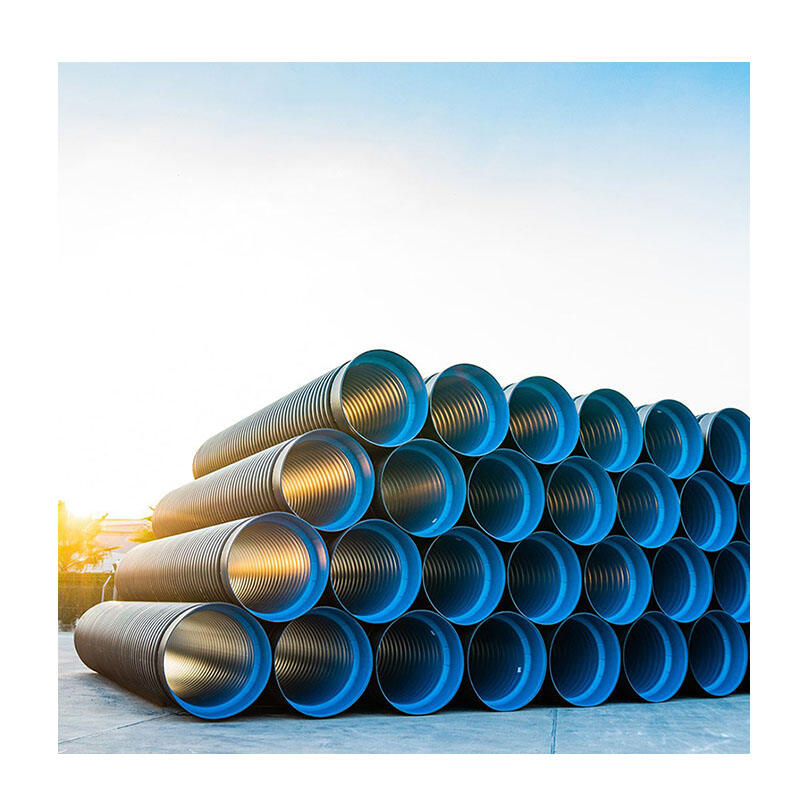
Exceptional Corrosion Resistance and Chemical Compatibility
The outstanding corrosion resistance of FRP pipe and fittings represents their most significant advantage over traditional piping materials, making them the preferred choice for handling aggressive chemicals and corrosive environments. Unlike steel, aluminum, or other metal pipes that deteriorate rapidly when exposed to acids, bases, salts, or organic solvents, FRP pipe and fittings maintain their structural integrity indefinitely under these challenging conditions. The resin matrix used in FRP pipe and fittings can be specifically formulated to resist particular chemicals, creating customized solutions for unique applications. Vinyl ester resins provide excellent resistance to strong acids and oxidizing agents, while epoxy novolac resins offer superior performance against aromatic hydrocarbons and organic solvents. This chemical compatibility eliminates the costly problems associated with metal pipe corrosion, including leaks, contamination, and system failures that can result in environmental damage and regulatory violations. In seawater applications, FRP pipe and fittings outperform stainless steel by resisting chloride-induced pitting and crevice corrosion that plague even high-grade metallic materials. The composite structure of FRP pipe and fittings prevents galvanic corrosion entirely, eliminating the electrochemical reactions that occur when dissimilar metals contact corrosive electrolytes. This advantage proves particularly valuable in underground installations where soil conditions vary and traditional cathodic protection systems may prove inadequate. Chemical processing plants rely on FRP pipe and fittings to transport concentrated acids, caustic solutions, and organic chemicals without risk of material degradation. The inert nature of properly formulated FRP pipe and fittings ensures that transported fluids remain uncontaminated by pipe material dissolution, maintaining product purity essential for pharmaceutical, food grade, and semiconductor applications. Additionally, the corrosion resistance of FRP pipe and fittings extends to atmospheric exposure, where traditional materials suffer from oxidation, UV degradation, and weathering effects that compromise their performance over time.