



What is S5, S4, S3.2, and S2.5 mean in PP-R pipes?
When purchasing PP-R pipes, we often see markings such as S5, S4, S3.2, and S2.5 on the pipe wall. What do these markings mean? Here's a brief explanation.
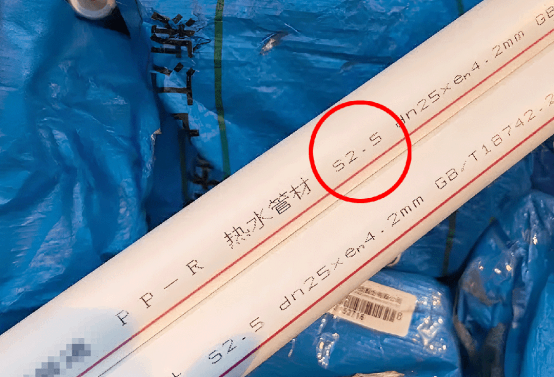
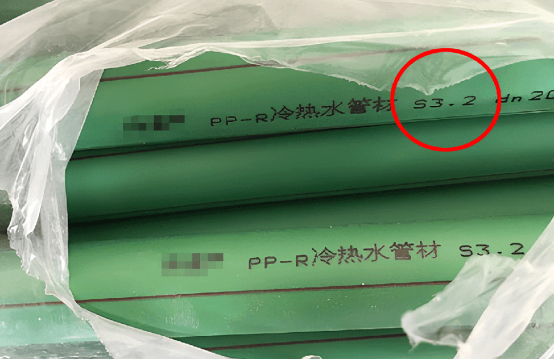
I. What is the "S" in pipe series?
"S" is a designation for pipe series. PP-R pipes are mainly classified into several series, such as S5, S4, S3.2, and S2.5. The smaller the number following "S," the thicker the wall and the higher the pressure resistance.
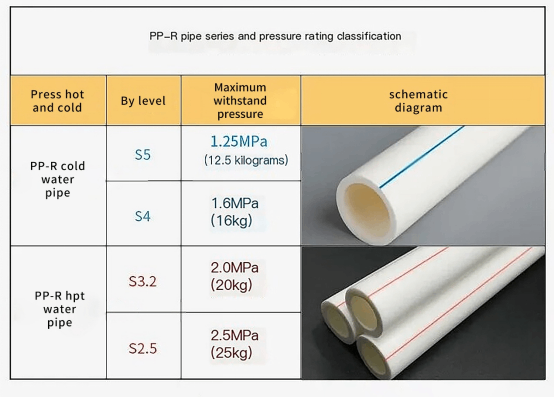
Generally, hot water piping systems mainly use the S3.2 and S2.5 pipe series, while cold water piping systems mainly use the S5 and S4 pipe series. The corresponding pressure ratings are as follows:
Cold water(Long-term service temperature≤40℃)Blue Line
PPR pipe specifications S5 series: 1.25 MPa (12.5 kg)
PPR pipe specifications S4 series: 1.6 MPa (16 kg)
Hot water(Long-term service temperature≤70℃)Red Line
PPR pipe specifications S3.2 series: 2.0 MPa (20 kg)
PPR pipe specifications S2.5 series: 2.5 MPa (25 kg)
II. Relationship between Pipe Series S and Maximum Allowable Working Pressure (20℃, 50 years)
The pressure rating corresponding to the pipe series S of PP-R pipes varies depending on the overall service factor C of the piping system. This service factor C is the safety factor for the pipe material in the engineering application, and can be taken as 1.2~1.5.
C=1.25 and C=1.5 are the overall serviceability (design) factors, also called safety factors, used when determining the maximum permissible working pressure (or nominal pressure PN) of PP-R pipes (random copolymer polypropylene pipes). Simply put, it represents the extra safety margin allocated to the pipe material during engineering design to cope with uncertainties in long-term use (such as material aging, installation deviations, temperature fluctuations, pressure peaks, etc.).
The smaller the C value (e.g., 1.25), the higher the permissible pressure (the pipe material is used more aggressively); the larger the C value (e.g., 1.5), the greater the safety margin, and the more conservative the permissible continuous working pressure.
If the project is critical, a lower design value, such as 1.25, can be used; for ordinary civil use, a value of 1.5 is generally acceptable.
I hope my article is helpful to everyone.
I'm Leo, an engineer and sales consultant, and I look forward to interacting with you more.