



What Should B2B Buyers Know When Sourcing HDPE Pipe Fittings in Bulk?
High-density polyethylene pipe fittings have become essential components in modern industrial infrastructure, offering superior durability and chemical resistance for demanding applications. B2B buyers face numerous considerations when sourcing these critical components in bulk quantities, from technical specifications to supplier reliability. Understanding the complexities of HDPE pipe fittings procurement can significantly impact project success, cost efficiency, and long-term operational performance. Professional procurement teams must evaluate multiple factors including material grades, manufacturing standards, delivery timelines, and total cost of ownership. The industrial piping market continues to evolve with new technologies and regulations, making informed purchasing decisions more critical than ever for maintaining competitive advantages.
Technical Specifications and Material Standards
Understanding PE100 Material Grade Requirements
PE100 represents the highest grade of polyethylene material commonly used in pressure pipe applications, offering exceptional stress crack resistance and long-term hydrostatic strength. When sourcing HDPE pipe fittings, buyers must verify that suppliers provide genuine PE100 material with proper certification documentation. This material grade ensures minimum required strength (MRS) of 10 MPa, providing superior performance in high-pressure applications compared to lower grades. Quality assurance protocols should include material traceability, batch testing records, and compliance with international standards such as ISO 4427 or ASTM D3035. Professional buyers should request detailed material data sheets, including density measurements, melt flow index values, and carbon black content specifications to ensure consistency across bulk orders.
Temperature resistance characteristics play a crucial role in HDPE pipe fittings performance, with PE100 materials maintaining structural integrity across wide temperature ranges. Buyers must consider operating environment conditions, including ambient temperatures, fluid temperatures, and potential thermal cycling effects on fitting performance. Material selection should account for coefficient of thermal expansion, which affects joint integrity and system alignment over extended service periods. Proper material specification prevents premature failure, reduces maintenance costs, and ensures reliable long-term operation in critical applications.
Dimensional Accuracy and Tolerance Requirements
Precision manufacturing ensures proper fit-up and joint integrity when installing HDPE pipe fittings in complex piping systems. Dimensional tolerances directly impact fusion joint quality, with excessive variations potentially causing weak joints, leaks, or installation difficulties. Buyers should specify acceptable tolerance ranges for critical dimensions, including outside diameter, wall thickness, and fitting geometry. Manufacturing standards such as ISO 4427 provide detailed dimensional requirements that suppliers must meet consistently across production runs. Quality control processes should include statistical process control methods to monitor dimensional consistency and identify potential manufacturing issues before delivery.
Socket depth and fusion zone geometry require particular attention when evaluating HDPE pipe fittings for bulk procurement. Proper socket design ensures adequate fusion area for strong, reliable joints while maintaining ease of installation. Buyers should verify that fitting designs comply with established fusion welding procedures and equipment compatibility requirements. Dimensional verification should include gauge testing, coordinate measuring machine inspections, and sample fusion joint testing to validate manufacturing quality. Consistent dimensional accuracy reduces installation time, minimizes field modifications, and ensures predictable joint performance across large-scale projects.
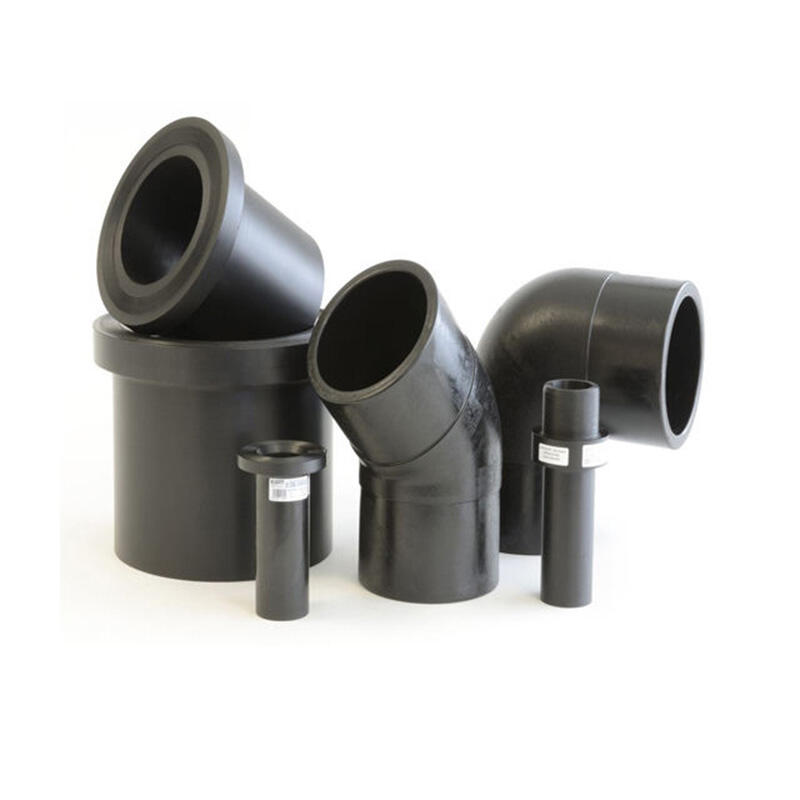
Supplier Evaluation and Quality Assurance
Manufacturing Capability Assessment
Evaluating supplier manufacturing capabilities requires comprehensive assessment of production capacity, quality systems, and technical expertise. Professional buyers should conduct facility audits to verify equipment capabilities, process controls, and personnel qualifications. Modern HDPE pipe fittings manufacturing requires sophisticated injection molding equipment, precise temperature control systems, and rigorous quality testing protocols. Suppliers must demonstrate consistent production capacity to meet delivery schedules while maintaining quality standards throughout high-volume production runs. Manufacturing certifications such as ISO 9001, API Q1, or equivalent quality management systems provide additional assurance of systematic quality control processes.
Production scalability becomes critical when sourcing HDPE pipe fittings for large projects or ongoing supply agreements. Buyers must evaluate supplier capacity for surge production, inventory management capabilities, and flexibility to accommodate changing demand patterns. Supply chain resilience requires assessment of raw material sourcing, backup production facilities, and contingency planning for potential disruptions. Established manufacturers typically maintain strategic inventory levels, multiple production lines, and qualified backup suppliers to ensure continuous supply availability.
Quality Control and Testing Protocols
Comprehensive quality control programs ensure HDPE pipe fittings meet specified performance requirements throughout the supply chain. Testing protocols should include incoming material verification, in-process quality checks, and finished product validation testing. Critical tests for HDPE pipe fittings include hydrostatic pressure testing, dimensional verification, material property confirmation, and visual inspection for surface defects. Buyers should require detailed test reports, statistical quality data, and traceability documentation for each production lot. Third-party testing and certification provide additional validation of product quality and compliance with industry standards.
Long-term performance testing provides valuable insights into HDPE pipe fittings reliability under actual service conditions. Accelerated aging tests, stress crack resistance evaluations, and environmental stress testing help predict long-term performance characteristics. Buyers should request historical performance data, field failure analysis reports, and continuous improvement documentation from potential suppliers. Quality assurance programs should include corrective action procedures, supplier performance monitoring, and regular quality reviews to ensure consistent product reliability.
Cost Analysis and Total Ownership Considerations
Initial Purchase Price Evaluation
HDPE pipe fittings pricing involves multiple factors beyond basic unit costs, including volume discounts, delivery terms, and payment conditions. Bulk purchasing typically offers significant cost advantages through economies of scale, reduced handling costs, and streamlined logistics. Buyers should evaluate pricing structures carefully, considering quantity breaks, annual volume commitments, and long-term supply agreements. Market pricing for HDPE pipe fittings fluctuates based on raw material costs, manufacturing capacity utilization, and competitive dynamics. Professional procurement teams should monitor market trends, establish pricing benchmarks, and develop sourcing strategies that balance cost optimization with supply security.
Transportation and logistics costs can represent substantial portions of total HDPE pipe fittings procurement expenses, particularly for high-volume orders. Buyers should evaluate different shipping methods, consolidation opportunities, and regional sourcing options to optimize total delivered costs. Packaging efficiency, handling requirements, and storage considerations affect overall logistics expenses and project timelines. Strategic sourcing may involve regional suppliers, consolidated shipping arrangements, or just-in-time delivery programs to minimize total cost of ownership while ensuring reliable supply availability.
Long-Term Performance and Maintenance Costs
Life cycle cost analysis provides comprehensive evaluation of HDPE pipe fittings total ownership expenses over extended service periods. High-quality fittings may command premium initial prices but deliver superior long-term value through reduced maintenance requirements, extended service life, and improved reliability. Buyers should consider factors such as corrosion resistance, mechanical durability, and environmental performance when evaluating different supply options. Total cost of ownership includes installation costs, maintenance expenses, replacement requirements, and potential system downtime costs associated with fitting failures or performance issues.
Warranty coverage and supplier support services contribute significantly to long-term value propositions for HDPE pipe fittings procurement. Comprehensive warranties provide protection against manufacturing defects, performance failures, and premature deterioration. Buyers should evaluate warranty terms, claim procedures, and supplier responsiveness to quality issues. Technical support services, including installation guidance, troubleshooting assistance, and performance optimization consulting, add substantial value for complex applications or challenging operating conditions.
Delivery and Logistics Management
Supply Chain Planning and Scheduling
Effective supply chain management ensures timely delivery of HDPE pipe fittings while minimizing inventory carrying costs and storage requirements. Project-based procurement requires careful coordination between manufacturing schedules, transportation arrangements, and installation timelines. Buyers should establish clear delivery schedules, milestone requirements, and contingency plans for potential delays or disruptions. Lead times for HDPE pipe fittings vary significantly based on size, quantity, customization requirements, and supplier capacity utilization. Strategic planning should account for seasonal demand variations, supplier maintenance schedules, and potential supply chain disruptions.
Inventory management strategies must balance supply availability with storage costs, handling requirements, and capital investment considerations. HDPE pipe fittings require proper storage conditions to prevent damage, contamination, or degradation during extended storage periods. Climate control, protection from UV exposure, and proper handling procedures ensure product quality throughout the supply chain. Just-in-time delivery programs can reduce inventory costs but require reliable suppliers, accurate demand forecasting, and flexible logistics arrangements.
Quality Assurance During Transportation
Protecting HDPE pipe fittings during transportation requires appropriate packaging, handling procedures, and quality verification protocols. Proper packaging prevents physical damage, contamination, and environmental exposure that could compromise product performance. Buyers should specify packaging requirements, handling instructions, and inspection procedures for incoming shipments. Transportation damage can result in hidden defects, dimensional changes, or surface contamination that affects installation quality and long-term performance. Comprehensive inspection procedures should include visual examination, dimensional verification, and documentation of any transportation-related issues.
Documentation and traceability systems ensure proper identification, quality verification, and warranty coverage for HDPE pipe fittings throughout the supply chain. Each shipment should include detailed packing lists, material certifications, test reports, and installation instructions. Proper labeling systems facilitate inventory management, installation planning, and quality control processes. Digital documentation systems can improve traceability, reduce paperwork, and provide real-time visibility into supply chain status and product information.
Installation Considerations and Technical Support
Fusion Welding Compatibility and Procedures
HDPE pipe fittings installation requires specialized fusion welding equipment, trained personnel, and established procedures to ensure reliable joint performance. Butt fusion, electrofusion, and socket fusion methods each have specific requirements for equipment, materials, and environmental conditions. Buyers should verify that selected HDPE pipe fittings are compatible with planned installation methods and available equipment. Fusion parameters including temperature, pressure, and timing must be optimized for specific material combinations and fitting geometries. Proper installation procedures ensure strong, leak-free joints that maintain structural integrity throughout the system service life.
Environmental conditions during installation significantly affect fusion joint quality and long-term performance of HDPE pipe fittings. Temperature, humidity, wind, and contamination can impact fusion welding procedures and joint integrity. Installation guidelines should address weather limitations, contamination control, and quality verification procedures for field conditions. Proper training programs ensure installation personnel understand critical procedures, quality requirements, and troubleshooting techniques for various installation challenges.
Technical Documentation and Support Services
Comprehensive technical documentation provides essential information for proper HDPE pipe fittings selection, installation, and maintenance. Installation manuals should include detailed procedures, equipment specifications, quality control requirements, and troubleshooting guidance. Technical data sheets provide material properties, dimensional specifications, pressure ratings, and compatibility information. Buyers should verify that suppliers provide complete documentation packages, training materials, and ongoing technical support services. Professional technical support helps resolve installation challenges, optimize system performance, and address any quality concerns that arise during construction or operation.
Training programs and certification services ensure proper installation techniques and quality control procedures for HDPE pipe fittings applications. Qualified suppliers often provide hands-on training, certification programs, and ongoing technical support to ensure successful project outcomes. Training should cover material handling, fusion welding procedures, quality control methods, and troubleshooting techniques. Certified installation personnel demonstrate competency in critical procedures and can ensure reliable joint quality throughout large-scale installations.
FAQ
What are the key quality certifications to look for when sourcing HDPE pipe fittings
Professional buyers should verify that HDPE pipe fittings suppliers maintain ISO 9001 quality management certification, along with product certifications such as NSF, WRAS, or equivalent drinking water approvals where applicable. Material certifications should confirm PE100 grade compliance with standards like ISO 4427, ASTM D3035, or EN 12201. Third-party testing laboratory reports provide additional validation of material properties, dimensional accuracy, and performance characteristics. Suppliers should also maintain manufacturing certifications specific to their production processes and quality control systems.
How do bulk purchasing agreements affect HDPE pipe fittings pricing and delivery terms
Bulk purchasing typically offers volume discounts ranging from 10-25% compared to smaller quantity orders, with additional savings possible through annual volume commitments or long-term supply agreements. Delivery terms often improve with bulk orders, including reduced lead times, consolidated shipping, and flexible scheduling options. Payment terms may include volume-based discounts, extended payment periods, or consignment inventory arrangements for large customers. Buyers should negotiate comprehensive agreements covering pricing structures, delivery schedules, quality requirements, and performance guarantees to maximize bulk purchasing benefits.
What are the critical storage requirements for HDPE pipe fittings inventory management
HDPE pipe fittings require protection from direct sunlight, extreme temperatures, and contamination during storage to prevent material degradation or damage. Storage areas should maintain temperatures between -40°C and 60°C, with protection from UV exposure through covered storage or indoor facilities. Proper stacking methods, support systems, and handling procedures prevent deformation or stress concentration that could affect fitting performance. Inventory rotation systems ensure older stock is used first, while proper labeling and documentation systems maintain traceability and quality control throughout storage periods.
How can buyers verify the long-term performance reliability of HDPE pipe fittings suppliers
Buyers should request historical performance data, customer references, and case studies demonstrating successful long-term installations using the supplier's HDPE pipe fittings. Field performance records, failure analysis reports, and continuous improvement documentation provide insights into product reliability and supplier responsiveness to quality issues. Site visits to existing installations, customer interviews, and technical performance evaluations help validate supplier claims and product performance. Professional buyers should also evaluate supplier financial stability, manufacturing capacity, and commitment to ongoing product development and quality improvement programs.