



What Types of HDPE Pipe Fittings Are Commonly Used in Municipal Projects?
Municipal infrastructure projects rely heavily on durable and reliable piping systems to deliver essential services like water supply, sewerage, and gas distribution. Among the various materials available, high-density polyethylene (HDPE) has emerged as the preferred choice for many municipalities due to its exceptional performance characteristics. HDPE pipe fittings play a crucial role in these installations, providing secure connections that ensure system integrity and longevity. Understanding the different types of HDPE pipe fittings available for municipal applications is essential for engineers, contractors, and project managers who want to achieve optimal results in their infrastructure projects.
Essential Categories of HDPE Pipe Fittings in Municipal Systems
Butt Fusion Fittings for High-Pressure Applications
Butt fusion HDPE pipe fittings represent the gold standard for municipal water and gas distribution networks where high pressure and long-term reliability are paramount. These fittings create homogeneous joints that match the strength of the pipe itself, eliminating weak points in the system. The fusion process involves heating both pipe ends and the fitting to precise temperatures, then joining them under controlled pressure to create a molecular bond. Municipal water treatment plants frequently employ butt fusion HDPE pipe fittings for their main distribution lines because these connections can withstand decades of service without degradation.
The manufacturing precision required for butt fusion fittings ensures consistent wall thickness and dimensional accuracy, critical factors in municipal applications where system pressure ratings must be maintained throughout the entire network. Engineers specify these HDPE pipe fittings for projects requiring joints that exceed the pipe's own pressure rating, making them ideal for high-rise building supply lines and industrial water systems. The seamless nature of butt fusion connections also prevents root intrusion and reduces maintenance requirements over the system's operational life.
Electrofusion Fittings for Confined Space Installation
Electrofusion HDPE pipe fittings offer distinct advantages in municipal applications where space constraints or accessibility issues make butt fusion impractical. These fittings incorporate embedded heating elements that create fusion joints through electrical resistance heating, allowing installation in trenches, manholes, and other confined spaces. Municipal sewer rehabilitation projects commonly utilize electrofusion HDPE pipe fittings because technicians can complete joints in tight quarters without requiring large fusion equipment or extensive excavation.
The controlled heating process in electrofusion fittings ensures consistent joint quality regardless of ambient temperature or weather conditions, making them particularly valuable for emergency repairs and winter construction projects. Municipal maintenance crews appreciate the reliability of electrofusion HDPE pipe fittings because the integrated heating elements eliminate variables associated with external heating equipment. The fitting's design incorporates visual indicators that confirm proper fusion temperature and cooling time, providing quality assurance that meets municipal engineering standards.
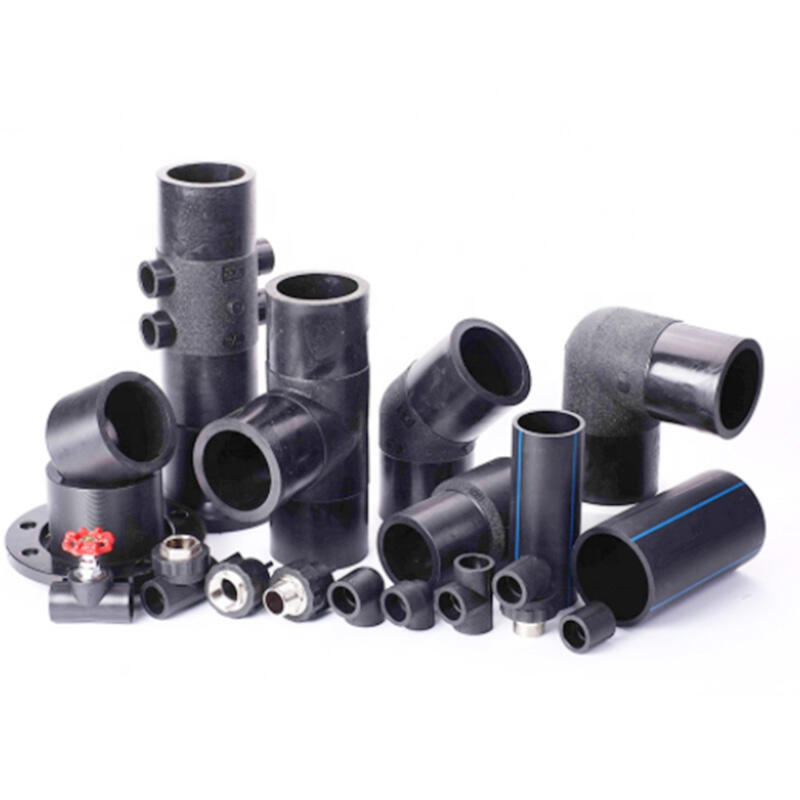
Specialized Municipal Applications for HDPE Pipe Fittings
Water Distribution Network Components
Municipal water distribution systems require a comprehensive range of HDPE pipe fittings to accommodate complex routing, pressure regulation, and service connections. Tee fittings enable branch connections for residential and commercial service lines, while reducer fittings allow system designers to optimize flow velocity and pressure throughout the network. Municipal engineers specify HDPE pipe fittings with specific pressure ratings and dimensional standards to ensure compatibility across different pipe manufacturers and installation phases.
The corrosion resistance of HDPE pipe fittings makes them particularly valuable in coastal municipalities where saltwater intrusion threatens traditional metal components. These fittings maintain their structural integrity and flow characteristics even when exposed to aggressive soil conditions or chemical disinfectants used in water treatment processes. Municipal water departments report significantly reduced maintenance costs when using HDPE pipe fittings compared to traditional materials, primarily due to their resistance to corrosion, scaling, and biological growth.
Sewerage and Stormwater Management Systems
Modern municipal sewerage systems increasingly rely on HDPE pipe fittings to handle the complex challenges of wastewater collection and treatment. These fittings must withstand exposure to aggressive chemicals, temperature fluctuations, and abrasive materials while maintaining leak-proof performance over decades of service. Specialized HDPE pipe fittings designed for sewerage applications incorporate features like smooth interior surfaces that minimize friction and prevent solid buildup, reducing the risk of blockages and system failures.
Stormwater management systems benefit from the flexibility and durability of HDPE pipe fittings, particularly in applications involving subsurface detention systems and infiltration galleries. These fittings can accommodate ground movement and settling without compromising system integrity, making them ideal for installations in areas with challenging soil conditions. Municipal stormwater engineers value the ability of HDPE pipe fittings to maintain their performance characteristics even when subjected to freeze-thaw cycles and hydraulic surge conditions common in storm drainage systems.
Installation Considerations for Municipal HDPE Pipe Fittings
Quality Control and Testing Protocols
Municipal projects involving HDPE pipe fittings require rigorous quality control measures to ensure system reliability and compliance with regulatory standards. Installation teams must follow specific procedures for joint preparation, fusion parameters, and cooling times to achieve optimal performance from these fittings. Pressure testing protocols for HDPE pipe fittings typically exceed the system's operating pressure by significant margins to verify joint integrity and identify potential weaknesses before the system enters service.
Documentation requirements for municipal HDPE pipe fittings installations include detailed records of fusion parameters, operator certifications, and testing results to support warranty claims and regulatory compliance. Quality assurance programs often specify third-party inspection of critical joints, particularly in applications involving potable water supply or high-pressure gas distribution. The traceability requirements for HDPE pipe fittings in municipal applications ensure that any future issues can be traced to specific manufacturing batches or installation procedures.
Long-Term Performance and Maintenance
The service life expectations for HDPE pipe fittings in municipal applications typically span 50 to 100 years, making their selection and installation critical long-term infrastructure investments. These fittings demonstrate excellent resistance to stress cracking and fatigue failure, even when subjected to cyclic loading conditions common in pressurized distribution systems. Municipal asset management programs increasingly recognize the total cost advantages of HDPE pipe fittings, which require minimal maintenance intervention throughout their operational life.
Preventive maintenance protocols for systems using HDPE pipe fittings focus primarily on monitoring system pressure and flow characteristics rather than component replacement or repair. The chemical inertness of these fittings eliminates concerns about galvanic corrosion or dezincification that plague traditional metal components in municipal systems. Advanced municipal utilities utilize remote monitoring systems to track the performance of HDPE pipe fittings installations, enabling predictive maintenance strategies and optimized system operations.
Economic and Environmental Benefits of Municipal HDPE Pipe Fittings
Cost-Effectiveness Analysis
Life-cycle cost analysis consistently demonstrates the economic advantages of HDPE pipe fittings in municipal applications, particularly when considering installation efficiency, maintenance requirements, and service life expectations. The lightweight nature of these fittings reduces transportation and handling costs, while their fusion joining methods eliminate the need for gaskets, mechanical fasteners, or specialized tools. Municipal procurement departments report significant cost savings when specifying HDPE pipe fittings for large-scale infrastructure projects due to reduced labor requirements and faster installation schedules.
The energy efficiency benefits of smooth-bore HDPE pipe fittings contribute to operational cost reductions in municipal pumping systems, as reduced friction losses translate to lower energy consumption over the system's operational life. Additionally, the leak-tight performance of properly installed HDPE pipe fittings minimizes water loss and reduces the environmental costs associated with unaccounted-for water in municipal distribution systems. These economic benefits make HDPE pipe fittings an attractive option for municipalities facing budget constraints while maintaining infrastructure quality standards.
Sustainability and Environmental Impact
Environmental sustainability considerations increasingly influence municipal infrastructure decisions, and HDPE pipe fittings offer several advantages in this regard. The manufacturing process for these fittings produces fewer carbon emissions compared to traditional metal alternatives, while their extended service life reduces the frequency of replacement and associated environmental impacts. Municipal sustainability programs often highlight the recyclability of HDPE pipe fittings, which can be processed into new products at the end of their service life.
The chemical resistance of HDPE pipe fittings eliminates the need for protective coatings or cathodic protection systems that require ongoing maintenance and eventual disposal. This characteristic reduces the environmental burden associated with system maintenance while ensuring consistent performance in aggressive soil conditions. Water quality benefits from HDPE pipe fittings include the absence of metallic taste or odor issues, reduced bacterial growth potential, and elimination of heavy metal leaching concerns that can affect public health and environmental quality.
FAQ
What pressure ratings are available for municipal HDPE pipe fittings?
Municipal HDPE pipe fittings are available in pressure ratings ranging from 100 PSI to 250 PSI, with specialized high-pressure versions capable of handling up to 400 PSI for specific applications. The pressure rating depends on the pipe's diameter, wall thickness, and the specific grade of HDPE material used in manufacturing. Municipal engineers should verify that fitting pressure ratings match or exceed the system operating pressure plus appropriate safety factors as specified by local codes and standards.
How long do HDPE pipe fittings last in municipal applications?
Properly installed HDPE pipe fittings in municipal applications typically provide 50 to 100 years of reliable service, depending on operating conditions and installation quality. These fittings demonstrate excellent resistance to environmental stress cracking, chemical degradation, and fatigue failure under normal municipal operating conditions. The actual service life may vary based on factors such as soil chemistry, operating pressure, temperature cycles, and maintenance practices throughout the system's operational period.
Can HDPE pipe fittings be repaired if they develop leaks?
While HDPE pipe fittings rarely develop leaks when properly installed, repair options are available for situations where damage occurs due to external forces or installation errors. Electrofusion repair sleeves can address minor damage, while complete fitting replacement may be necessary for significant failures. Municipal maintenance crews typically receive training on approved repair procedures to ensure that any repairs maintain the system's pressure rating and long-term reliability standards.
What certifications should municipal HDPE pipe fittings meet?
Municipal HDPE pipe fittings should comply with relevant standards such as ASTM D3261, AWWA C906, and NSF 61 for potable water applications. Additional certifications may include FM approval for fire protection systems and DOT specifications for gas distribution applications. Municipal procurement specifications should require documentation of compliance with applicable standards and third-party certification to ensure product quality and regulatory compliance throughout the system's service life.